

Air Blown Fiber Unit ABF
Air blowing fiber unit is an efficient way to install fiber optic cable and facilitates future expansion of optical fiber networks. Air Blown Fiber is also recommended for environments where there will be many changes and additions to the network.
Overview:
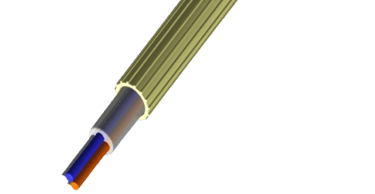
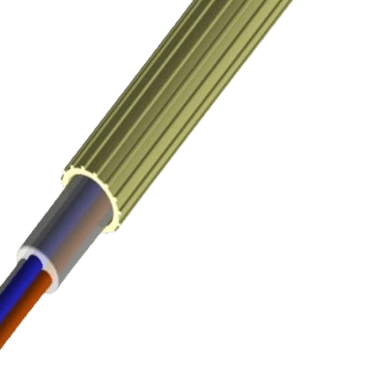
The Air Blown Fiber Unit “ABF” is small size, light weight, enhanced surface outer sheath fiber unit designed for blowing into micro tube bundles by air flow. The outer dry acrylate layer provides a high level of protection and excellent installation properties, and it can be blown into the microduct of 3.5mm inner diameter.
The fibers are coated with a resin which provides excellent dimensional and thermal stability to cushion the fibers, in addition, the resin can be easily stripped in connecting the fibers. The surface of the sheath is designed with slightly ribbed, compared to the surface of the traditional optical fiber cable, it provides not only the high level of mechanical protection, but also the perfect blowing performance.
Application:
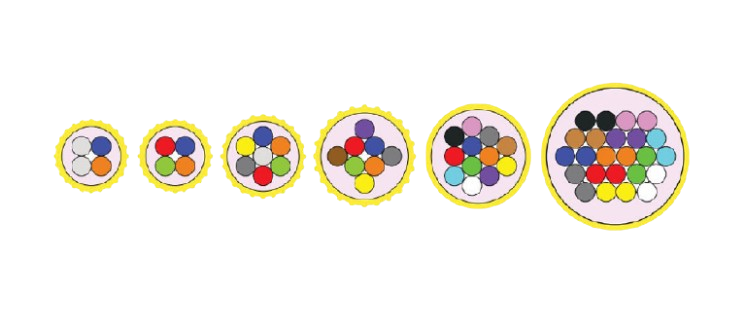
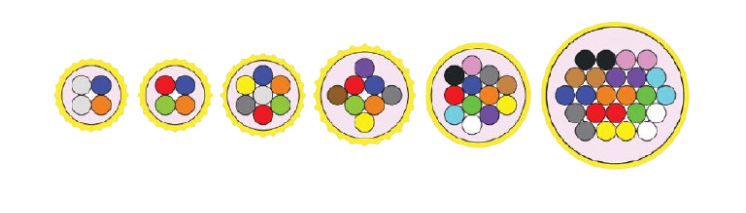
The Air Blown Fiber Unit bundles assemblies consist of a number of cores 2, 4, 8 and 12 cores, that enables installation of air blown fibers cables. The fiber assemblies are bundled with outer sheath is a soft acrylate resin thermoplastic that is of low friction.
Smaller diameter
Excellent environmental properties
The outer sheath is a soft acrylate resin thermoplastic or smooth, slightly ribbed polyethylene
Network design flexibility
Blown into the microduct of 3.5mm inner diameter
Fiber bundle diameter: 1.2 – 1.6 mm
Fiber type G.G652D, G.657A1, G.657A2
Fiber outer sheath is EPFU or EPSU
Low friction surface for maximum installation lengths
Excellent environmental properties
Material outer sheath is a soft acrylate resin thermoplastic or smooth, slightly ribbed polyethylene
Maximum Air Pressure (Blowing) 15bar
Temperature Performance[°C]: -40 to +60
Mechanical Performance Test compliance:
Tensile Performance: IEC 60794-1-21 Method E1
Bend: IEC 60794-1-21 Method E11
Impact: IEC 60794-1-21 Method E4
Crush: IEC 60794-1-21 Method E3
Operation Performance:
Optional Features:

Lenora Innovation
Empowering Change, Enriching Lives
Copyright © 2026 All rights reserved